

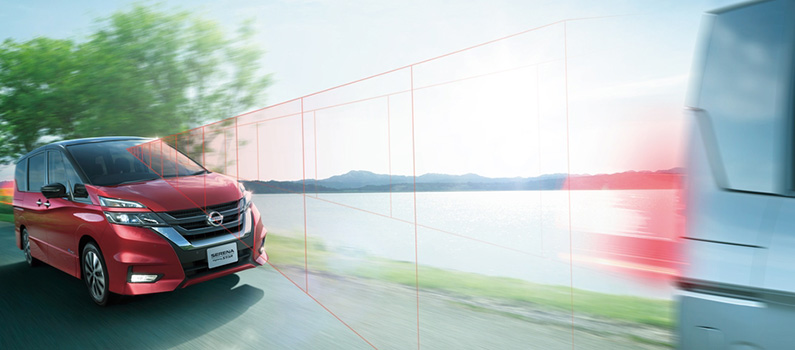
Nissan wants to put cars with significant autonomous-driving capability on sale by 2020, and it just took a big step toward that goal. The Japanese carmaker introduced a system called ProPilot that allows cars to autonomously accelerate, brake, and steer in highway traffic.
ProPilot debuted on the Nissan Serena minivan, which isn’t available in the U.S., but Nissan plans to offer the system here eventually. It uses a camera mounted at the top of the windshield to “see,” and is activated and deactivated by a switch on the steering wheel. The wheel also has a torque sensor that can tell whether drivers are gripping it, according to Automotive News. Drivers are required to touch the wheel periodically to keep the system active.
ProPilot autonomously follows the car in front at a speed set by the driver, as long as that speed is between 18 and 62 mph. The systems also keeps the car centered in its lane by reading lane markings. Nissan says ProPilot can slow the car to a full stop, and will then hold the brakes until the driver touches its activation switch, or presses the accelerator. The ability to follow other cars, make steering corrections, and autonomously brake are already available separately in many production cars, but ProPilot puts them all together.
Following ProPilot’s debut on the Serena in Japan, Nissan plans to bring the system to other markets, and add features. The carmaker says it will make ProPilot available in the U.S. and China, but did not specify when it would be available. The next market to get ProPilot will be Europe, where it will be offered on the Qashqai crossover sometime next year.
In 2018, Nissan plans to add the ability to automatically change lanes on the highway, much like Tesla’s Autopilot. It will follow that with a system that enables fully autonomous driving “on urban roads and in intersections” by 2020. Nissan and partner Renault said they plan to introduce autonomous tech on ten mainstream, mass-market models over the next four years.
That puts Nissan in a good position in the race to introduce fully-autonomous cars. Over the past few years, several carmakers have promised to make the technology available in production cars, or have started research projects. However, the introduction of ProPilot comes as Tesla faces an investigation of a fatal crash involving its Autopilot system. The system was active when a Model S collided with a tractor trailer, leading to questions about the safety of semi-autonomous systems that still require humans to be kept in the loop.
Smart sensors
ProPILOT makes use of sensors to determine whether a driver’s hands are on the steering wheel. If they’re not, a warning light is illuminated, followed by a series of warning chimes. If the driver still doesn’t respond after a few seconds, the system turns itself off
The ProPilot technology will take away the responsibility of speed, steering and braking from the driver while driving on the highway, though it still requires a human to stay attentive with their hands on the wheel. This new autonomous system is able to detect road and traffic situations and execute precise steering because of a single camera equipped with advanced image-processing technology located behind the rearview mirror.
When ProPilot is engaged and the car ahead stops, the autonomous technology applies the brakes, bringing the Serena to a full stop as well.
Easy engagement
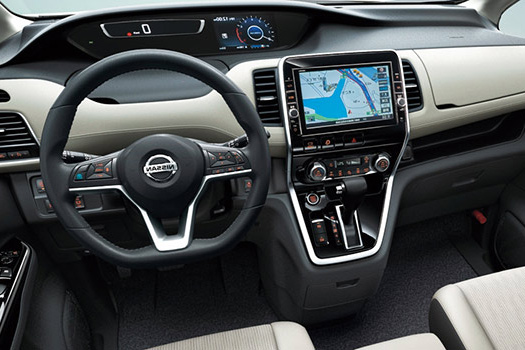
Thanks to a 7-inch display with intuitive indicators, using the ProPilot’s system is easy for first-time users to understand. Two buttons are installed on the steering wheel to engage ProPilot quickly and set the speed of the car.
Connect with us
